

Café · Manchester · ⭐ 9.5/10 · 1026 reviews · updated: 2026-08-10 17:33:44
Address: 62 Cross St, Manchester M2 4JQ, United Kingdom
There is a particular kind of green that Manchester learned to recognise very quickly. Blank Street Coffee arrived from New York by way of London, chose this city as the first place it would open outside the capital, and planted a small mint-green shopfront in the busiest retail crossing in the centre. Everything about the format is deliberate: a compact unit, a machine that removes the barista’s guesswork, a queue that moves, and a menu that half the customers are ordering for the matcha rather than the coffee.
Highlights
- Manchester was the brand’s first move outside London — the UK arm expanded here in December 2023 after building a large estate in the capital, which makes this one of the earliest Blank Street sites in the country outside the M25.
- The beans are roasted in Cornwall — the UK business buys a bespoke house blend from Origin Coffee Roasters, a long-established Cornish roastery, rather than importing the American blend.
- Swiss super-automatic machines instead of traditional espresso work — Eversys equipment pulls every shot to the same recipe, which is the whole point of the model.
- Matcha is not a side line — it accounts for roughly half of what the company sells, and the flavoured matcha drinks are the reason a large share of the queue is standing there.
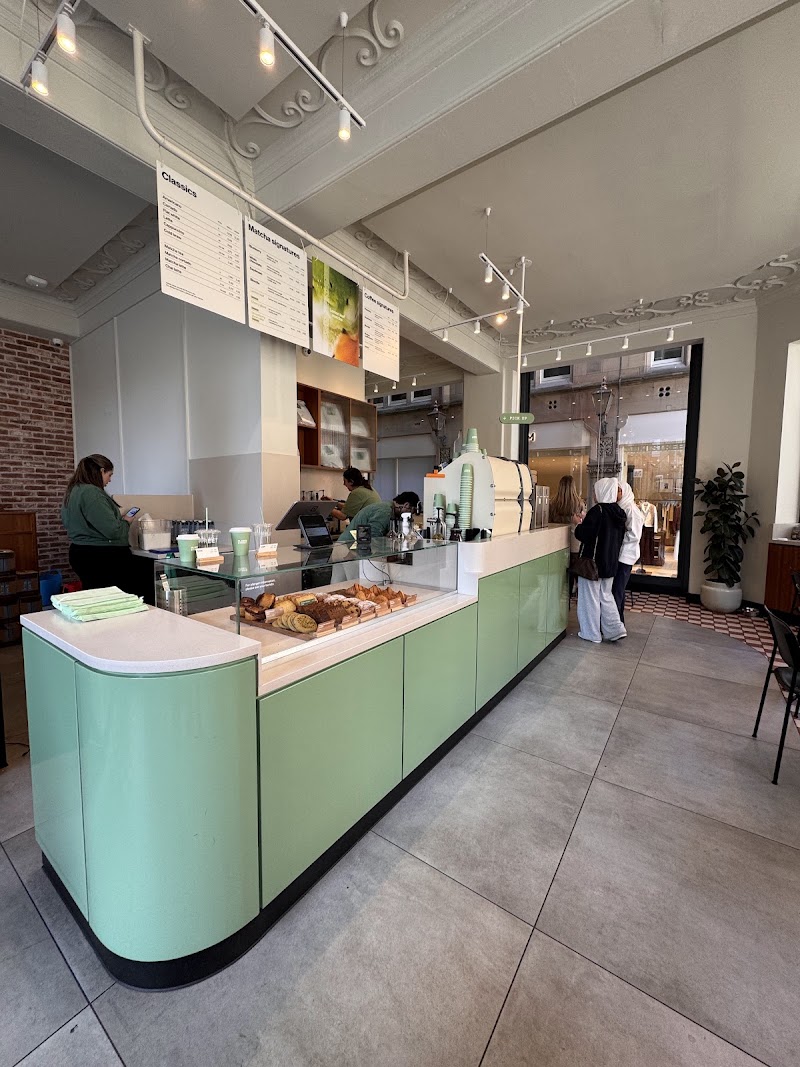
- A small unit built for flow, not for lingering — the shop is a compact ground-floor space of a few hundred square feet, laid out around the counter and the exit rather than around tables.
- App-first ordering — the brand runs its own ordering and loyalty app, and regulars use it to skip the wait entirely at peak.
What’s in the cup
This is a chain, and it should be judged on what chains are actually for: the same drink, made the same way, every time. Blank Street’s UK operation buys a bespoke blend — the Blank Blend — from Origin Coffee Roasters in Cornwall, one of the country’s better-known specialty roasteries, and it is specialty-grade arabica rather than commodity coffee dressed up in nice packaging. That is a meaningful decision. A chain of this size could easily have run a cheap generic blend behind an attractive shopfront, and it did not.
What you should not expect is the vocabulary of a single-origin bar. There is no rotating filter, no cupping notes chalked above the counter, no conversation about the farm. The blend is engineered to taste identical in every branch of the estate and to work under milk, because milk drinks are what the overwhelming majority of the queue is buying. Judged against that brief, it does the job well; judged against a hand-brewed Ethiopian at a specialty bar, it is simply playing a different sport.
The machines are the other half of the story. Blank Street uses Swiss-made Eversys super-automatics, which grind, dose, tamp and extract without a human decision at any stage. Purists dislike this on principle, and the objection is real — nobody is dialling in a grinder to today’s humidity here. But the trade is honest: what you lose in the ceiling of a great shot you gain in the floor, because a bad shot on a Monday afternoon from a tired barista simply does not happen. For a shop serving this many drinks in a small unit, consistency is the product.
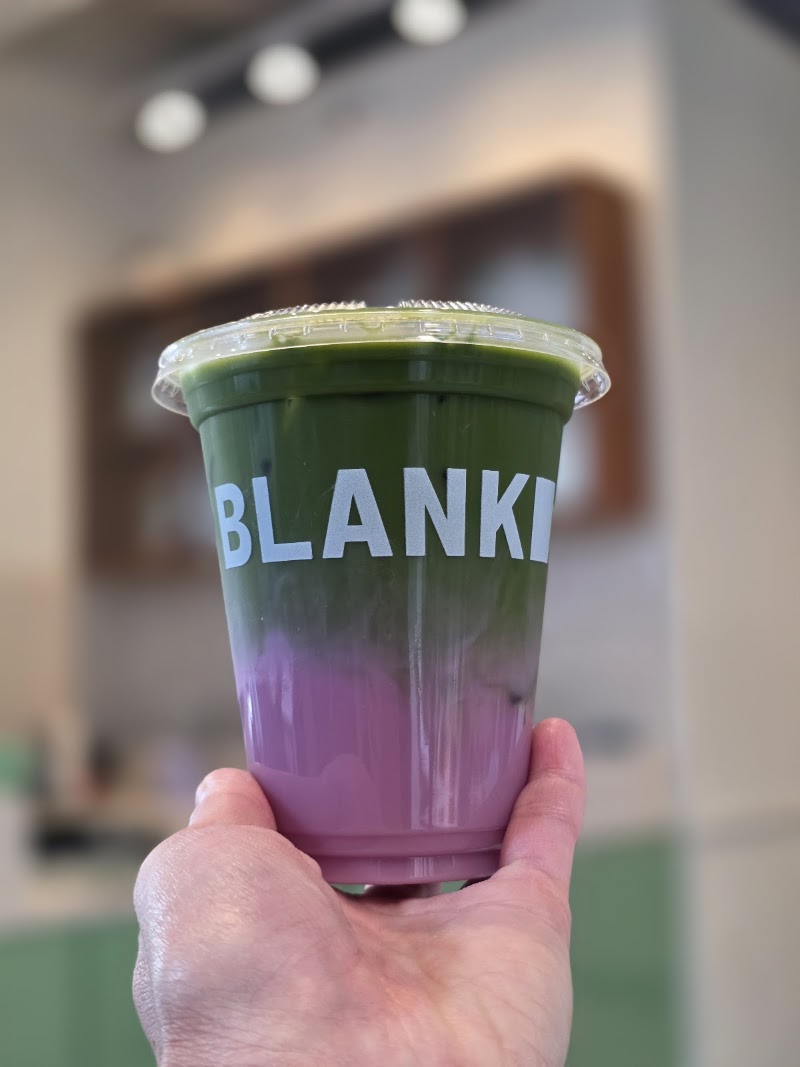
And then there is matcha, which by the company’s own account is around half the business. The flavoured matcha drinks — the pastel ones that made the brand famous on social media — are the single biggest reason people come in, and they are sweet, which is a fair thing to know before you order. If you want the tea without the dessert, ask for it plain.
Who’s behind it
Blank Street was founded in New York in May 2020 by Issam Freiha, Vinay Menda and Ignacio Llado, and it started in the least glamorous way imaginable: a battery-powered mobile coffee cart in Brooklyn, wheeled out in the summer of 2020 while the city’s cafes were still shuttered. The first permanent shop followed in Williamsburg in early 2021.
The model the founders copied was not American. They took their cues from Asian beverage retailers — the Hey Tea and Kopi Kenangan school — where the shop is small, the throughput is enormous, the drink is designed to photograph well and the app does most of the transactional work. Transplanting that into a Western high street is what made the company grow at a speed traditional cafe chains found alarming, and it is why the shop you walk into in Manchester feels less like a coffee house than like a very well-run pick-up counter.
British expansion followed from 2022, London first and heavily, and Manchester was the moment the brand stopped being a London phenomenon. Scotland came later. The company has taken criticism along the way — for the sugar content of its sweetest drinks, and from people who feel that automated espresso and influencer marketing are not what a coffee shop should be built on — and both criticisms are worth weighing against what it actually does well.
What it’s good for
Take this one on the way to something else. The unit is small, the seating is minimal, and the entire layout is designed around getting a drink into your hand and you back out of the door. That is not a failing; it is the brief. If you are walking between the shops and the tram, meeting someone in the retail core, or heading to the office with fifteen minutes to spare, it does exactly what you need and does it fast.
It is emphatically not a laptop cafe. There is no room to spread out, no bank of power sockets, and no cultural expectation that anyone will settle in for three hours. Anyone looking for a working table in central Manchester should aim at one of the larger independents instead; trying to make this shop into that will frustrate everyone, including you.
As a meeting place it works only for the short version — two people, one drink, a conversation of twenty minutes, ideally with the intention of walking on afterwards. Where it genuinely excels is the solo grab: order on the app while you are still walking, collect, leave. The regulars have worked this out, which is why the queue at peak is shorter than it looks.
The room
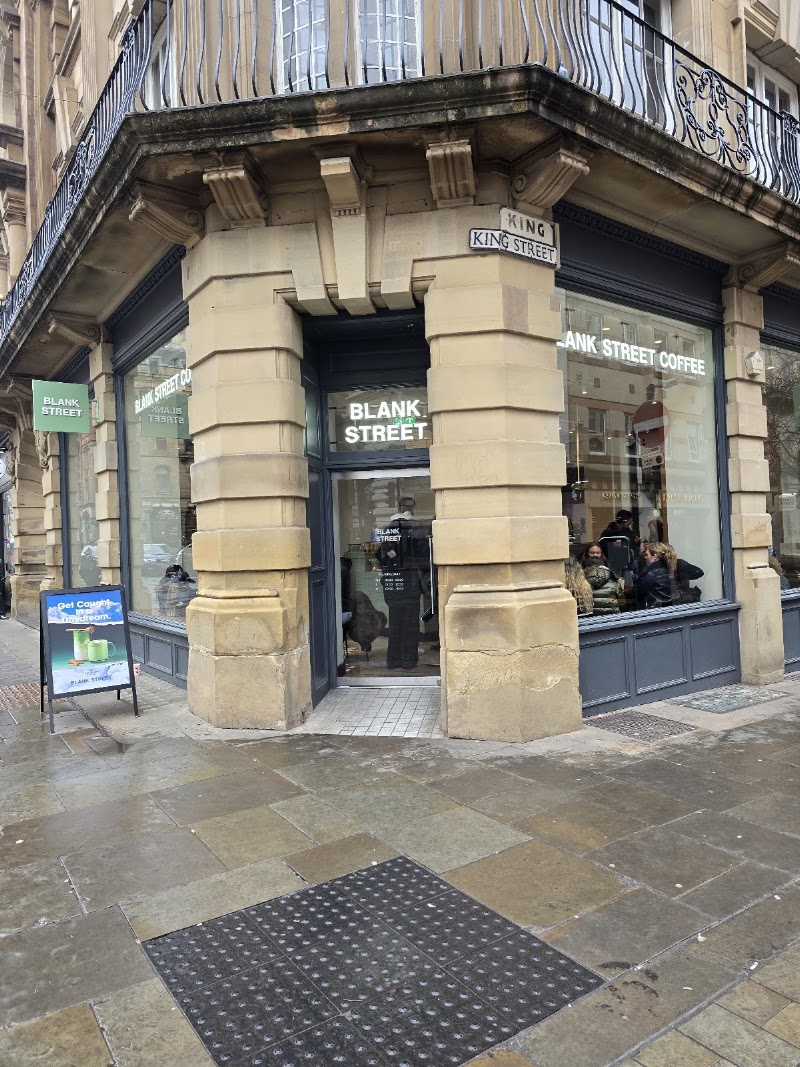
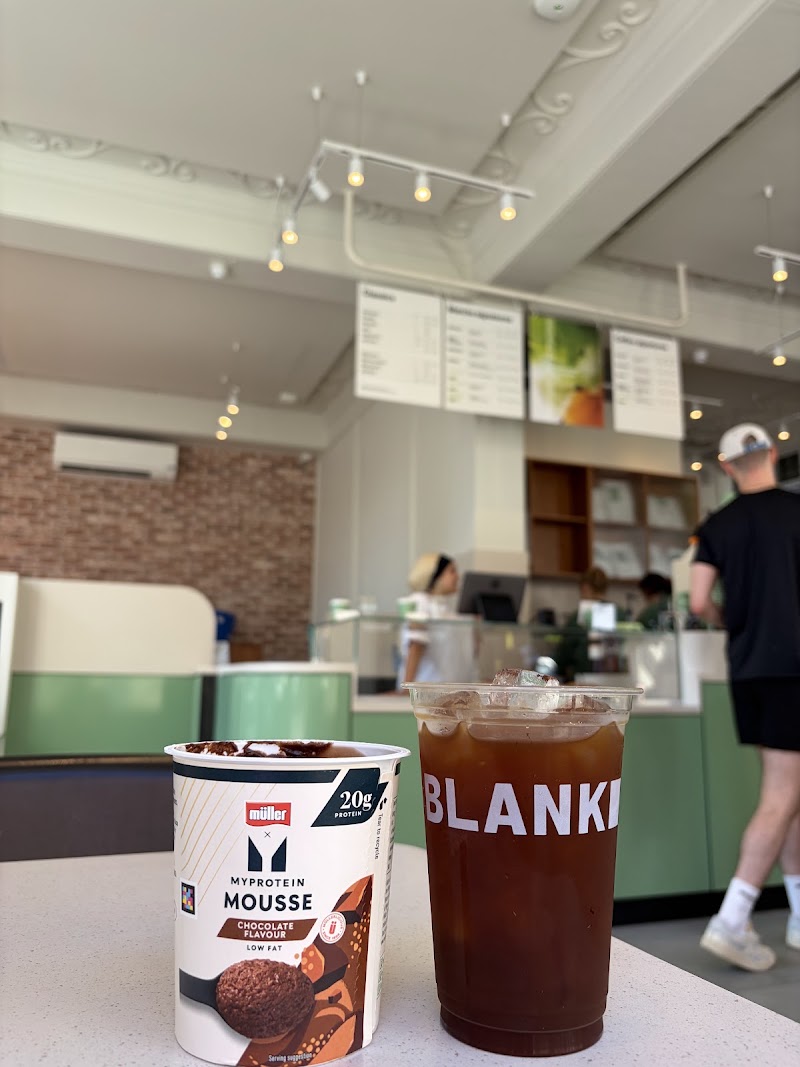
The shopfront is the brand’s mint green, and it is visible from a distance in a part of the centre where every other frontage is a national retailer. Inside, the space is compact — a few hundred square feet of ground floor, arranged around the counter with a stretch of perch seating rather than a room of tables. The design language is clean and pale, closer to a modern cosmetics shop than to a traditional cafe, and it is built to be photographed.
Noise comes from the street and from the queue rather than from conversation, because relatively few people are sitting. At the busiest points of a Saturday in the shopping core, the shop is essentially a corridor of people collecting drinks, and there is no pretending otherwise. Early on a weekday it is calm, and the perch seats by the window are a decent place to sit for a quarter of an hour and watch one of the busiest pedestrian crossings in the city.
Beyond the drinks
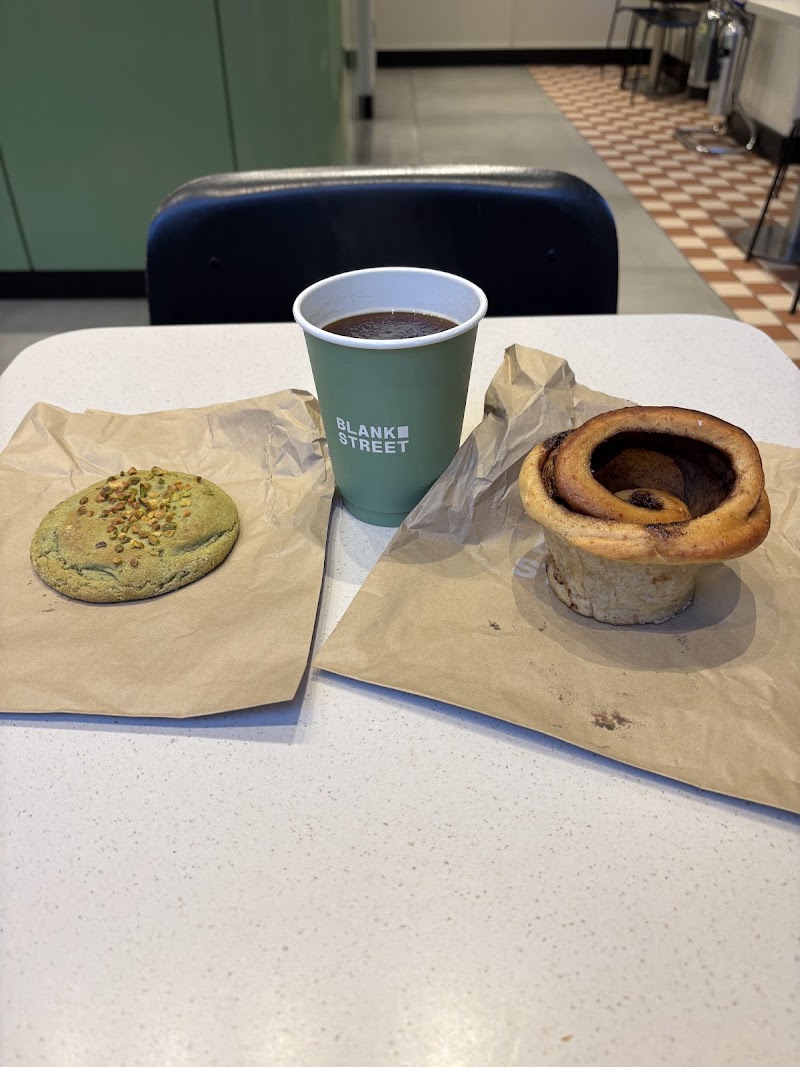
Food is a supporting act and honest about being one. There is a counter selection of pastries and small bakery items to go with a drink, supplied rather than baked on site — this is not a kitchen, and there is no space for one. It covers the case where you skipped breakfast and are walking to work; it does not cover lunch, and the brand does not pretend it does.
What the menu does invest in is the drinks range itself. Alongside the espresso and matcha lines there is a rotating seasonal list — the autumn and winter specials are a fixture, and they are where the brand does its marketing. Milk alternatives are standard rather than a grudging extra, which matters in a city with the student population Manchester has.
When to come
The rhythm is retail rather than residential. Mornings on weekdays are the commuter rush; the middle of the day at weekends is the shopping crowd, and that is the peak worth avoiding if you are not ordering ahead. The quietest stretch is the middle of a weekday afternoon, once the lunch traffic has cleared and before the offices empty.
Because it sits in the retail core rather than in a residential quarter, this is a daytime shop tied to the shopping day — it is not a place to find open late in the evening, and the surrounding streets empty out as the shops close. Plan around the shopping calendar rather than around the cafe: the weeks before Christmas in this part of Manchester are an entirely different proposition from a wet Tuesday in February.
Getting there
The shop sits in the heart of the retail core, a very short walk from the Royal Exchange and a couple of minutes from the Arndale — which means that if you are shopping in central Manchester you are already close, whether you realise it or not. The tram network runs through this part of the centre and Exchange Square and Piccadilly Gardens stops are both within easy walking distance, as is St Peter’s Square for the southern lines.
From either of the main railway stations it is a walk of roughly ten to fifteen minutes across the centre, and driving is genuinely pointless here: this is a pedestrianised shopping district with heavy restrictions and no reasonable place to stop. Come on foot or on the tram.
Good to know
Two things are worth setting expectations on. First, the sweetness: the drinks that made the brand famous are engineered to be sweet, and the sugar loading in the flavoured matcha and seasonal specials has been publicly criticised. If you want the matcha as tea rather than as dessert, order it unflavoured. Second, the automation: if the ritual of watching a barista work is part of why you go to a cafe, you will not find it here, and that is by design rather than by neglect.
On the positive side, this is a chain that has spent money where it counts. Buying a bespoke specialty-grade blend from a respected Cornish roastery is not the cheap option, and it puts the coffee here well above the high-street baseline. Use the app if you are in a hurry — the difference between ordering ahead and joining the queue at peak in this location is substantial.
Questions and answers
Whose coffee is it?
Origin Coffee Roasters in Cornwall roasts a bespoke blend for the UK business. It is specialty-grade arabica, not a generic commercial blend, which is unusual for a chain of this size.
Is the espresso made by a barista?
Not in the traditional sense. The shop runs Swiss Eversys super-automatic machines, which handle grinding, dosing and extraction to a fixed recipe. Staff operate the machine and build the drink, but nobody is adjusting the grind.
Is it worth going for the matcha?
That is what most of the queue is there for — matcha is around half of what the company sells. The flavoured versions are sweet and pastel-coloured; the plain version is available if you want the tea rather than the dessert.
Can I sit and work here?
Realistically, no. The unit is small, seating is limited to a perch or two, and the whole layout assumes you are leaving. For a working session, choose a larger independent elsewhere in the centre.
Is there proper food?
Only pastries and small bakery items brought in to go with a drink. There is no kitchen and no lunch offer, and the shop does not claim otherwise.
How long has it been in Manchester?
Since December 2023. Manchester was the first city outside London where the UK business opened, after it had already built a substantial estate in the capital.
How do I avoid the queue?
Order through the brand’s app before you arrive and collect. In a small unit in the middle of the shopping district, that is the difference between two minutes and a wait.
Is this a specialty coffee shop?
It occupies a middle ground. The beans are specialty grade and the roastery is a serious one, but the brewing is automated and the menu is built around consistency and flavoured drinks rather than around origin. Think of it as a high-street chain that buys better coffee than a high-street chain usually does.
Opening hours
| Day | Hours |
|---|---|
| Monday | 06:30–20:30 |
| Tuesday | 06:30–20:30 |
| Wednesday | 06:30–20:30 |
| Thursday | 06:30–20:30 |
| Friday | 06:30–20:30 |
| Saturday | 07:00–20:00 |
| Sunday | 07:30–19:00 |
Photos
Visitor reviews
Reviews last updated: 2026-08-10 17:33:44
Data is refreshed monthly. Sources: manchesterka.com and editorial picks based on reviews.
Мені попросили працівника на ім'я Метью пригощати нас напоями матча. Він був такий милий і порадив нам піцерії в центрі міста. У нього була справді привітна посмішка, і він наймиліша душа. Метью, ми тебе любимо!
Сподобався матча з чорницею та привітний персонал. Я додав ще одну порцію матчі та випив вівсяного молока, і напій був ідеальним.
Я обожнюю ванільний холодний напій з квасолею, він неймовірно смачний і чудово починає ранок. Що ще краще, так це ставлення персоналу: вони завжди такі привітні та усміхнені. Це, чесно кажучи, додає набагато більше позит…
Просто хотів висловити невелику подяку Мії та Метью сьогодні, оскільки вони мають найкращу енергію та найкращу атмосферу у спілкуванні зі своїми клієнтами. Я прийшов, щоб випити свій улюблений напій матча, крижаний блонд…
Я завітав сюди під час короткої візиту до Манчестера. У цьому кафе я почувався абсолютно бажаним гостем. Метью за барною стійкою був особливо фантастичним. Було чудово спостерігати, як він особисто спілкується з кожним к…