

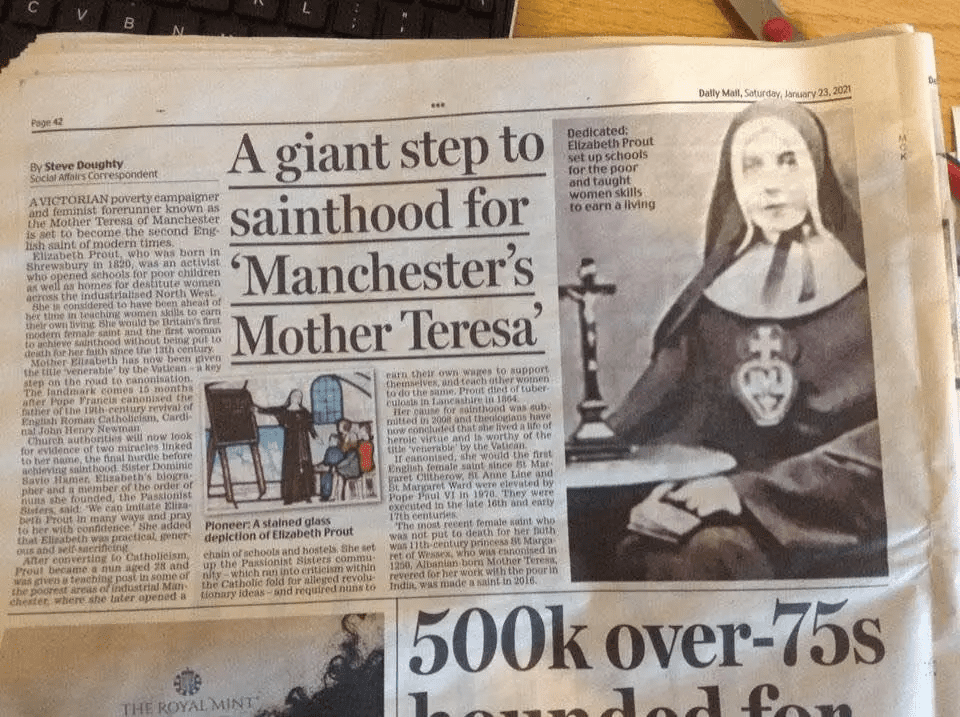
For centuries, Manchester’s cultural and religious life has been shaped by various figures. Among them, Elizabeth Prout holds a significant place. Known as Mother Mary Joseph of Jesus, Mother Mary Joseph, and the Mother Teresa of Manchester, she made a remarkable contribution to the Passionist movement in Manchester and other English cities. Below is an insight into her life and legacy. Next on manchesterka.com.
What Do We Know About Elizabeth Prout?
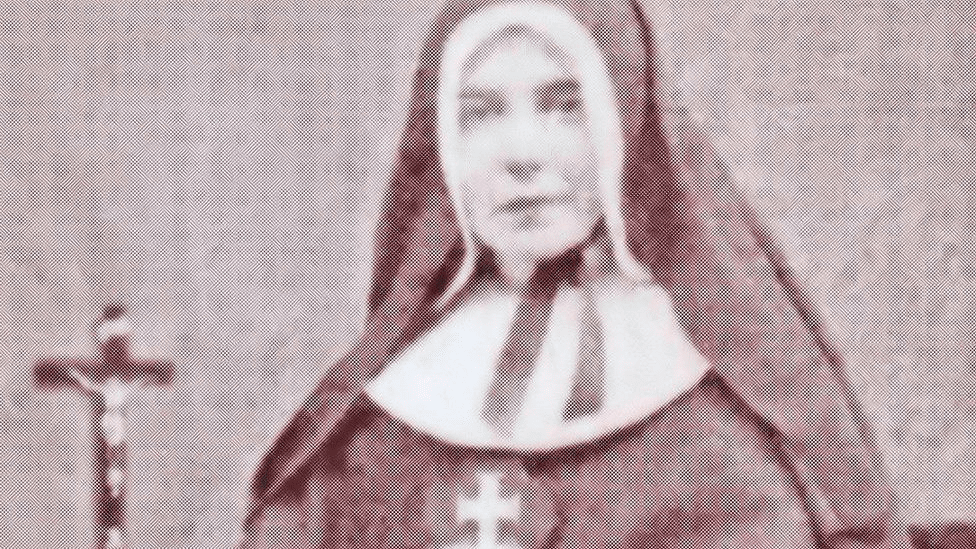
Little is known about Prout’s early years. She was born into an ordinary family in 1820 and was raised in the Anglican tradition.
At the age of 12, she converted to Catholicism. This decision was not without influence; missionaries such as Dominic Barberi and Father Gaudentius Rossi, prominent figures in the Passionist movement, played a pivotal role in her choice.
Prout’s parents reacted negatively to her conversion. However, over time, they too embraced Catholicism.
Despite initial opposition, Prout felt a profound calling to a religious life. She sought guidance from Father Rossi, who advised her to join the Sisters of the Infant Jesus in Northampton. There, she found happiness and a sense of purpose. Unfortunately, severe health issues prevented her from continuing her work with the congregation. The sisters, concerned about her fragile condition, believed she was too weak for the daily demands of their work, prompting Prout to return to her family home.
After recovering, Prout did not abandon her dream of religious service. For some time, she carried out parish missions at St. Chad’s Church near Manchester. Eventually, she again sought guidance from Father Rossi, who suggested she teach at a local parish school.
The Passionist Movement
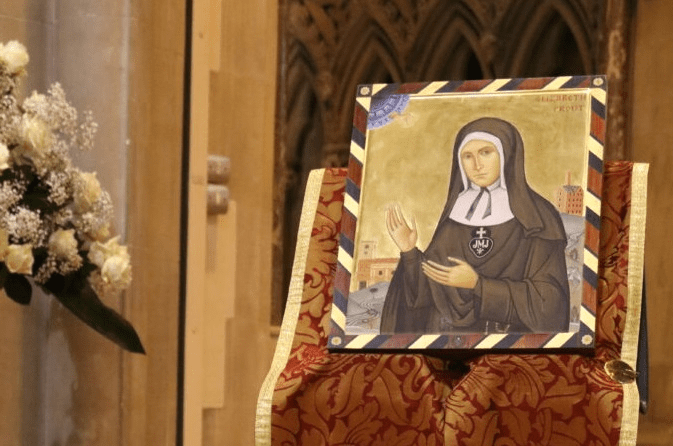
Prout was deeply involved in the Passionist movement, a Catholic religious order established in the 18th century, focusing on meditations on the Passion of Jesus Christ.
She significantly contributed to this movement by founding the “Sisters of the Cross and Passion,” also known as the Passionist Sisters, in Manchester. This Catholic religious community played a critical role in advancing the broader Passionist mission in Britain.
Establishing a Catholic Religious Community in Manchester
In the 19th century, Manchester was the heart of Britain’s industrial boom. The city’s numerous factories attracted workers from across the country, but living and working conditions were deplorable.
When Prout moved to Manchester, she was appalled by the squalid conditions endured by the workers. She joined a local parish and began visiting the sick and the poor daily. She also educated factory workers and Irish immigrants fleeing famine in their homeland.
Distressed by the suffering she witnessed, Prout, along with like-minded individuals, established a Catholic religious community to assist the impoverished, overworked factory workers, and immigrants in Manchester.
Her efforts expanded, leading to the establishment of a new community on Stokes Street. This community offered help and educational opportunities for women, enabling them to acquire skills and secure better employment, improving their living standards.
Harsh Living and Working Conditions
The work of Prout and her community was physically and emotionally taxing. They laboured tirelessly for the well-being of Manchester’s poor. However, the harsh conditions took a toll, and some of Prout’s companions had to leave.
New sisters joined her, but they too struggled with the severe demands of their mission. Over time, health problems plagued Prout and her community members, who were too poor to afford medical care. Prout took it upon herself to care for the sick.
The challenges hindered their work, prompting Prout to seek alms in Ireland with the bishop’s permission. Upon her return, she found conditions in Manchester had deteriorated further.
Elizabeth Prout’s Legacy
Throughout her life, Prout remained dedicated to her religious mission. She helped the poor, factory workers, and immigrants, and championed women’s education. Despite numerous challenges, she founded nine schools, personally teaching in some of them.
Tragically, the grueling work and dire living conditions claimed Prout’s life at the young age of 43. Her legacy as a compassionate and tireless advocate for Manchester’s poor and vulnerable endures, leaving an indelible mark on the city’s cultural and spiritual identity.