

The name Maisie Mosco is widely recognized thanks to her novel Almonds and Raisins, which vividly depicts the lives and struggles of Manchester’s Jewish community. No other writer in Manchester or British history has managed to so poignantly capture the challenges of Jewish immigration and life in the city as Maisie Mosco did with her trilogy. Her work is a fictional saga about two families who endured the horrors of pogroms in the Russian Empire at the beginning of the 20th century, faced challenges of survival and acceptance in a new country, and navigated generational conflicts. Mosco’s creativity reflects her deep connection to her Jewish heritage, making her one of the most treasured voices in Jewish historical literature. Next on manchesterka.com.
What Is Known about Maisie Mosco?
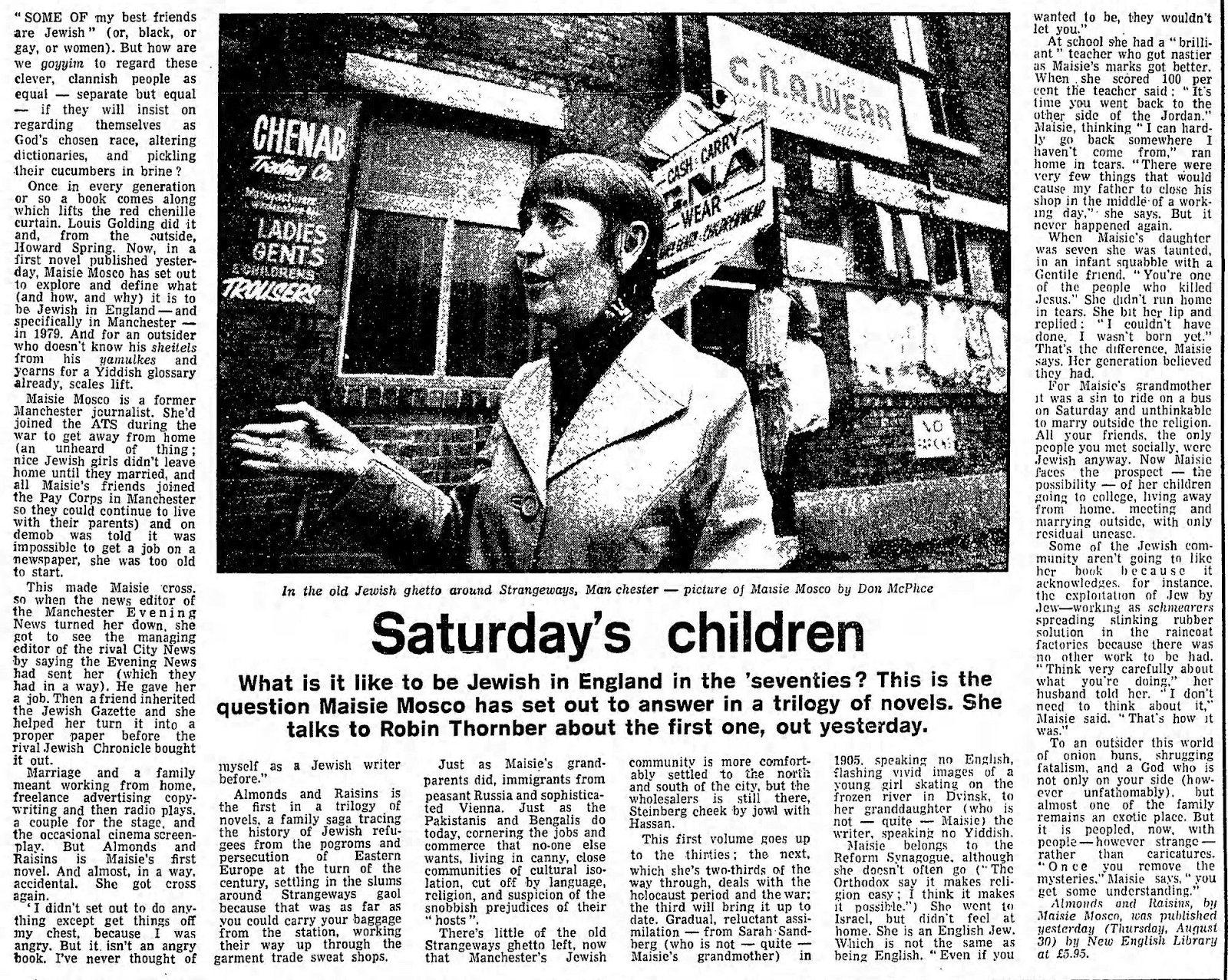
Maisie Mosco was born and raised in Manchester, specifically in Oldham, northeast of the city center. Born Maisie Gottlieb in 1924, she was the eldest of three children. Her parents were Latvian and Viennese Jews who settled in Britain at the end of the 19th century. Both of Mosco’s parents were born in Manchester.
At the beginning of the 20th century, Manchester had a significant Jewish community, formed mainly by immigrants fleeing pogroms and other persecutions in the Russian Empire. Growing up in this vibrant Jewish society, surrounded by traditions and stories, she was profoundly affected by the hardships entire families endured. These experiences would later shape her novels, lending them a historical authenticity that resonated deeply with readers who shared similar stories.
Mosco was a talented young woman who could have pursued any academic profession. However, due to her mother’s illness, she chose to study medicine. Writing was not initially her primary focus.
As the eldest daughter, she left school at 14 to help with the family business. At 18, she joined the Women’s Auxiliary Territorial Corps and, by the end of World War II, was teaching soldiers how to read and write.
How Mosco’s Life Connected Her to Writing
After World War II, Mosco was hired as an editor for the Jewish Gazette, a weekly Jewish newspaper. She soon began writing short radio plays for the BBC. This marked the beginning of her writing career. One of her early radio plays, Happy Family, was so successful that it was adapted into the horror film Mumsy, Nanny, Sonny and Girly.
Mosco’s early exposure to Jewish heritage, history, and culture greatly influenced her work as a writer. Themes of immigration and Jewish adaptation to life in a new country became central to her creative output.
Between 1979 and 1998, she published 16 novels, each meticulously portraying the lives of Jewish families who fled pogroms in the Russian Empire in the early 1900s and settled in northern Manchester. These works often drew on the history of Mosco’s own family.
The Struggles of Jews in the Early 20th Century in the Trilogy Almonds and Raisins
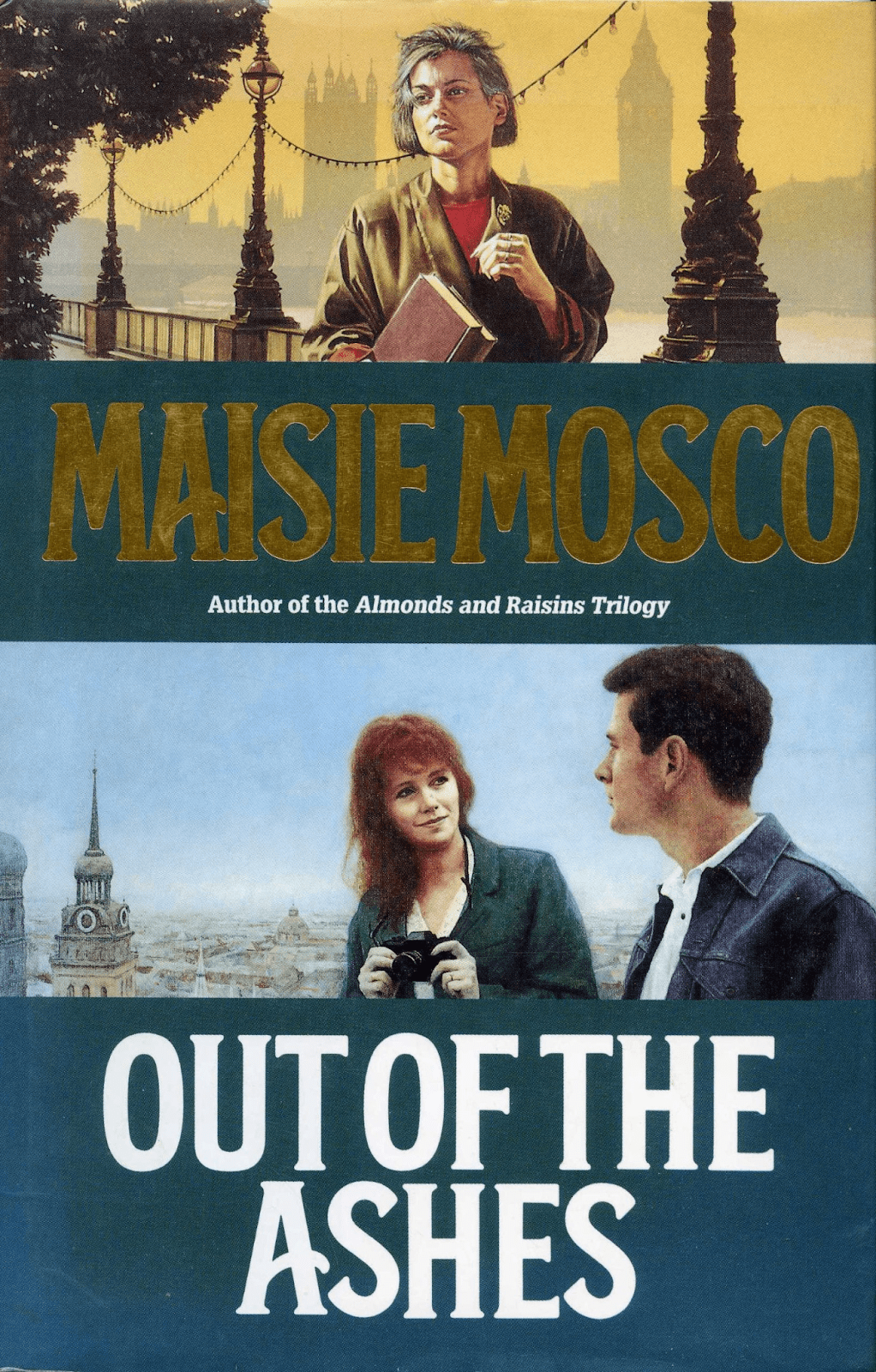
Mosco’s most famous work is the trilogy Almonds and Raisins, first published in 1979. The novel quickly garnered a devoted readership, especially among Jewish audiences. It tells the story of the Sandberg family, a young Jewish family forced to emigrate due to oppression, legal restrictions, and pogroms in their homeland. After enduring a period of hardship, the family settles in Manchester. Through the lives of the Sandbergs, Mosco explores themes of identity, faith, family values, and resilience.
The novel spans generations of Jewish life, reflecting the hopes, dreams, and challenges faced by immigrants as they adapted to their new home while preserving their cultural identity.
The Sandbergs’ story depicts their evolution, showing how each generation encounters new struggles. Mosco’s characters wrestle with antisemitism, familial expectations, and the tension between respecting their heritage and assimilating into the industrial city of Manchester.
Central to Almonds and Raisins and Mosco’s other works about Jewish life is the theme of family. Her characters are bound by strong familial ties but often face conflicts arising from generational and cultural differences. Mosco’s work reflects the universal struggles of the Sandbergs, both within and outside their community.
Mosco’s novels emphasize the resilience of the Jewish people. Despite persecution, integration challenges, and prejudice in their new country, they persevered.
In the 21st century, Maisie Mosco’s novels, especially Almonds and Raisins, remain a vital part of global Jewish literature. Her realistic portrayal of Jewish immigrant life in Britain at the beginning of the 20th century has earned her lasting acclaim.
The life of this remarkable Jewish writer from Manchester ended in 2011, at the age of 87. She left a significant legacy through her novels and played a key role in shaping Manchester’s cultural sphere and promoting its rich history.
Source:
- https://www.burynewroad.org/salford/maisie-mosco-tells-everyones-jewish-history-of-bury-new-road/
- https://elizabethgaskellhouse.co.uk/maisie-mosco-more-manchester-women-writers/
- https://www.burynewroad.org/salford/the-maisie-mosco-interview-on-the-almonds-and-raisins-trilogy/
- https://www.goodreads.com/book/show/1252161.Almonds_and_Raisins