

Café · Manchester · ⭐ 9.3/10 · 1148 reviews · updated: 2026-08-10 17:33:42
Address: 35 Dale St, Manchester M1 2HF, United Kingdom
Manchester has plenty of cafés that buy their beans from one good roastery and stick with it. Idle Hands made the opposite decision and built an entire business on it: a multi-roaster bar that pours coffee from Oslo, Aarhus, Helsinki, Cardiff and London, rotating constantly, so that the thing you drank last month will not be on the counter today. Dave and Lucy spent three years being moved on from one temporary home to another before they finally landed a permanent room on the eastern edge of the Northern Quarter, and the persistence is now part of the legend.
Highlights
- A multi-roaster counter, not a house blend — two single origins on espresso at any time, one on batch brew and roughly five available as hand pour-overs, all rotating.
- Roasters from across Europe — Tim Wendelboe, La Cabra, Square Mile, Hard Lines, Dark Arts, Good Life and Strangers have all appeared on the grinder, which is a serious guest list by any national standard.
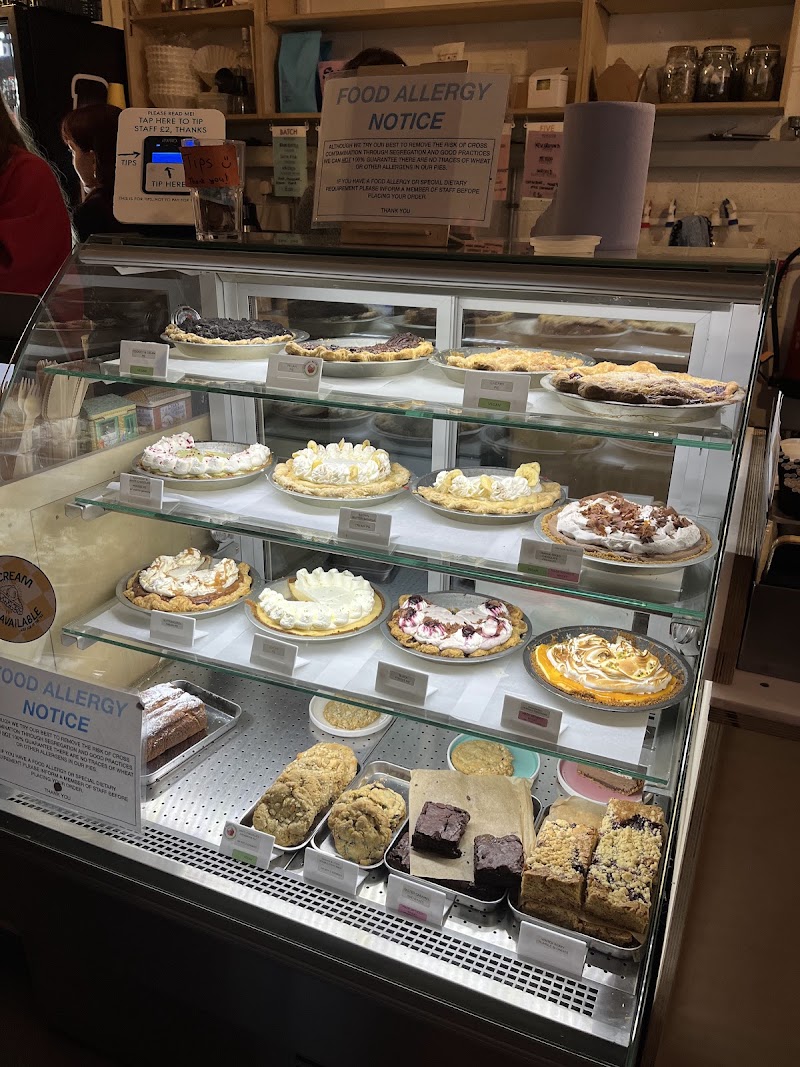
- Pies made in house by Lucy — five or six baked fresh every day, which is a genuinely unusual thing for a specialty coffee bar to be doing.
- Licensed — beer, wine and cocktails alongside the coffee mean the room does not die at the end of the afternoon the way most specialty bars do.
- Three years of pop-ups before a permanent home — it began beside Piccadilly station in 2015, was moved on by a landlord, spent a spell inside the GRUB food-hall community, and only settled in 2018.
- A grand, high-ceilinged room — a long rectangular space in one of the Northern Quarter’s imposing Victorian buildings, sharing an entrance with a craft-beer bar.
What’s in the cup
This is the most interesting coffee offer on any list of Manchester cafés, and the reason is a decision most rooms are too nervous to take. Manchester has excellent local roasteries — Ancoats, Heart & Graft, ManCoCo and Grindsmith all work within a short ride of the centre — and the standard move for a good café here is to tie yourself to one of them and let their house style become yours. Idle Hands does not do that. It buys from whoever is roasting something worth drinking, wherever they are, and changes constantly.
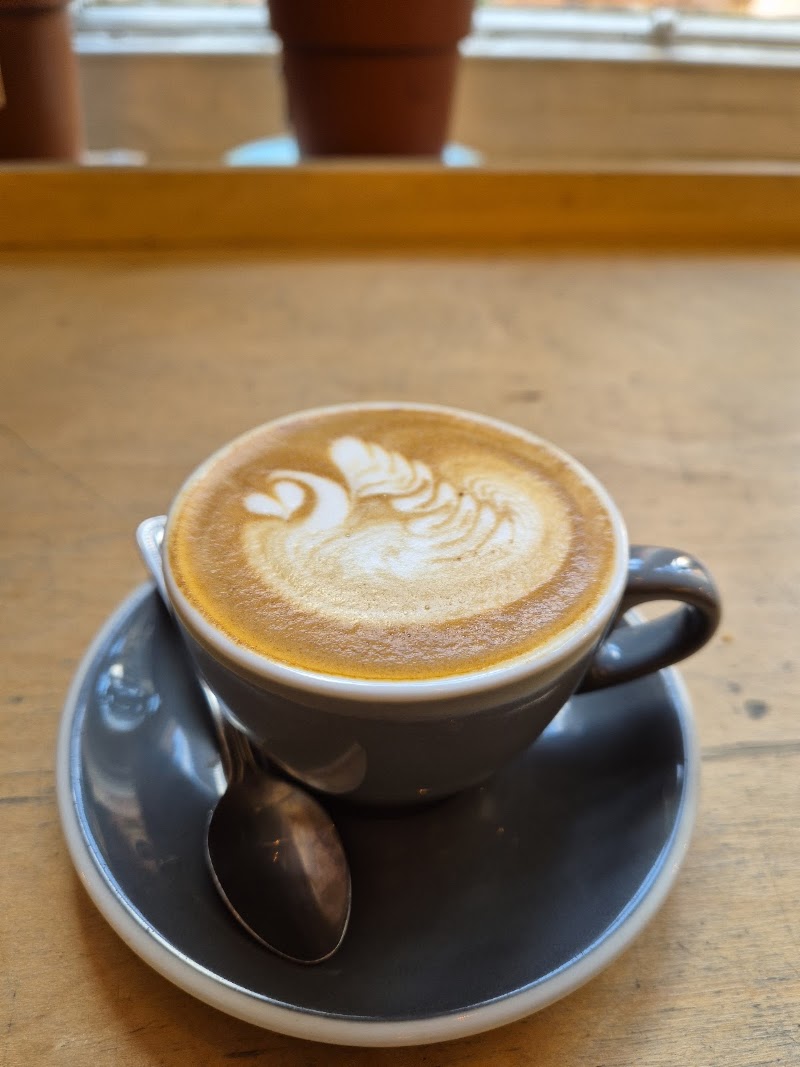
The mechanics are unusually generous. At any given moment there are two single origins on espresso rather than one, which means you can drink the same drink twice in an hour and taste two entirely different coffees. A third sits on batch brew for anyone who wants filter immediately and without ceremony. And a brew bar runs roughly five more as hand pour-overs, made on the V60 or the Aeropress to order, which is where the real depth of the list lives.
The guest list over the years reads like a survey of European specialty roasting: Tim Wendelboe from Oslo, La Cabra from Aarhus, Good Life from Helsinki, Square Mile and Dark Arts from London, Hard Lines from Cardiff, Strangers from Norwich, Nude Espresso. Nothing about this is decorative — the point of a multi-roaster model is that the person behind the counter has to be able to talk about every one of them, and here they can. If you have ever wanted to taste the difference between a Nordic light roast and a British one side by side without leaving a table, this is the room in Manchester where that is possible.
The corollary, and it is worth saying plainly: there is no house blend to fall back on and no guarantee of consistency between visits. That is not a bug, it is the entire proposition. If what you want is the same flat white you had last time, tasting exactly as it did last time, you will be happier somewhere else.
Who’s behind it
Idle Hands belongs to Dave and Lucy, who have run it themselves from the start and whose fingerprints are on both sides of the counter — his on the coffee list, hers on the pies that come out of the kitchen every morning.
The origin story is one of the better ones in British specialty coffee, mostly because it involves so much bad luck. The business began in 2015 as a six-month pop-up beside Piccadilly station, then took a second site nearby that was meant to be permanent and was not — a landlord problem forced them out. In 2017 they spent a period operating within the GRUB community, the food-hall and street-food operation that has done a great deal for independent Manchester hospitality. Only in 2018 did they finally open a permanent room, which by a neat accident sits almost opposite the site they had been forced to leave.
Three years of impermanence would have killed most cafés. What it produced here was a business with an unusually loyal following, because the people who followed Idle Hands from pop-up to food hall to permanent address were doing it for the coffee rather than for the convenience of the location.
Who it’s for and what visit it fits
The primary scenario is the one this room was built for: coming to drink coffee attentively. If you sit at the counter, order something from the brew bar and ask what it is, you will get a real answer, and that conversation is the product. For anybody visiting Manchester who cares about coffee, this is close to a compulsory stop.
It is also, unusually, an evening room. Because the café is licensed and shares its entrance with a beer bar, it does not empty out and shut down the moment the office crowd goes home the way most specialty counters do. That makes it one of the few places in the city where you can meet somebody for a coffee at an hour when the alternative would normally be a pub.
On laptop work, the honest answer is a qualified yes with one important caveat. Wi-Fi is free, though you need a code for it, and the seating variety is good — window bars, low tables in rows, a long high table and stools at the counter. But power sockets are limited, and that single fact governs everything: this is a room for a couple of hours on a charged battery, not for a full working day plugged into a wall. Come with the expectation of a session rather than a shift.
For a quiet conversation between two people it works well outside peak, particularly at the low tables away from the counter. Takeaway is straightforward, though drinking a hand pour-over out of a paper cup on the pavement rather misses the point of coming.
The room and the atmosphere
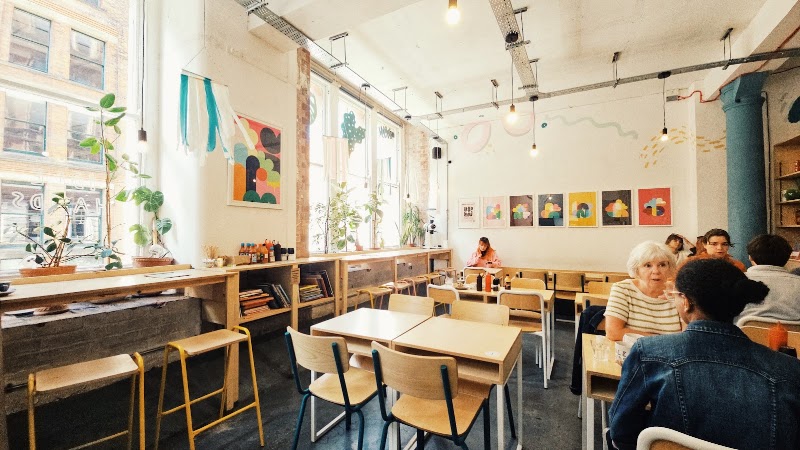
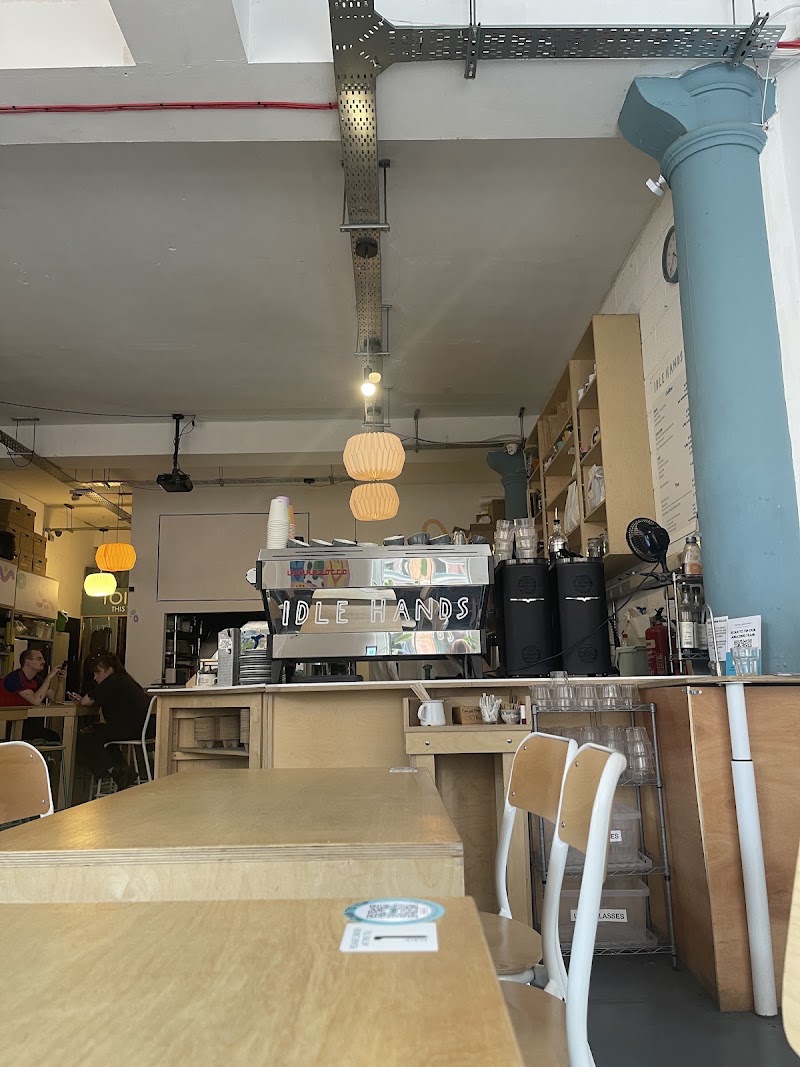
The permanent home is architecturally the best thing about it after the coffee: a long, broad, high-ceilinged rectangle in one of the district’s grand Victorian buildings, reached up a short flight of steps and entered through a doorway shared with a craft-beer bar. The proportions do the work — a room with that much height above your head feels calm even when it is full.
Two sets of windows along the front carry bar seating for six and for four, which are the seats people fight over on a bright morning. Behind them the floor is laid out in three rows of low two-, four- and six-person tables, with a long high table and stools for larger or more sociable groups, and five high-backed chairs directly at the counter for people who came to talk to whoever is brewing.
The mood is calmer and more grown-up than the brunch rooms a few streets west. This is not a queue-and-turnover operation; people sit, and the noise is conversation rather than clatter. It fills at peak but rarely feels frantic. There is no terrace, so the room is the whole experience, and the shared entrance with the beer bar gives the evening a slightly different character from the morning — worth knowing rather than worth worrying about.
What goes with the coffee
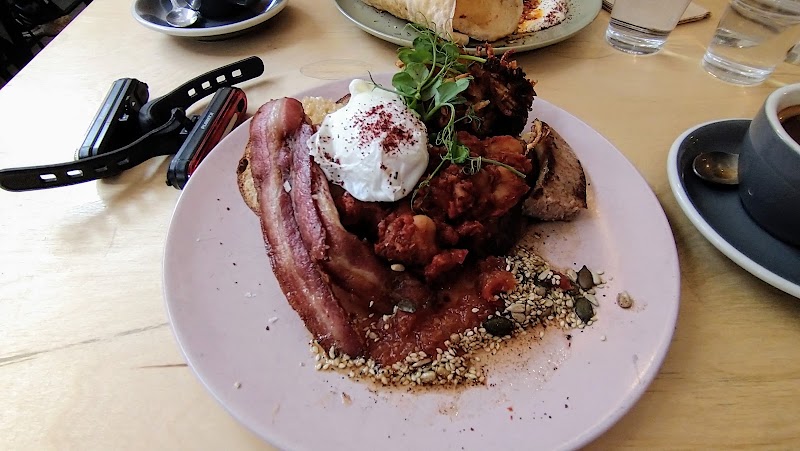
The food answer here is short and genuinely distinctive: pies, made on site. Five or six of them are baked fresh every day by Lucy, which puts Idle Hands in a very small category — a specialty coffee bar that actually produces its own hot food rather than reselling a wholesale pastry range like almost everybody else.
Around that there is a breakfast and lunch offer for people who want something lighter, and the licensed side extends into beer, wine, spirits and cocktails, which is what allows the room to function into the evening. That combination — serious single-origin filter in the morning and a proper drinks list at night, with home-baked pies running through the middle — is not a formula anybody else in the city is executing.
The honest note is that the pies are the reason to eat here, and if they have sold out by the time you arrive, the food proposition thins considerably. Come earlier in the day if the pie is part of the plan rather than an afterthought.
When to come
The great structural advantage of Idle Hands over the rest of the city’s specialty scene is that it does not stop at the end of the afternoon. Most good coffee rooms in Manchester have shut before the evening; this one, being licensed, keeps going, which makes it the default answer when somebody wants to meet after work without going to a bar.
Mornings are the serious coffee window — the brew bar has its full range on, the pies are all still there, and the room is calm enough for the conversation across the counter that makes the place what it is. Weekday afternoons are the quietest and best time for a long sit or a stretch of work. Weekends are busier without ever becoming a brunch scrum, because the format simply does not attract that crowd. Evenings are a different room again, and worth trying once even if you only ever come here for coffee.
Getting there
The café sits on the eastern edge of the Northern Quarter, in the stretch of grand old warehouses that runs down towards the canal and Piccadilly. That puts it about five minutes’ walk from Piccadilly station, which makes it one of the easiest specialty coffee stops in the country to fit around a train.
The Piccadilly Gardens tram interchange is a short walk in the other direction, and every line in the network passes through it. Buses along the district’s edge are frequent. Driving is the usual Northern Quarter mistake — narrow one-way streets and permit parking — so the multi-storey car parks near the station are the sensible option if you must.
One practical note on arrival: the entrance is shared with a craft-beer bar and the room is up a short flight of steps, so it is less obvious from the pavement than a shopfront café would be. Look for the doorway rather than for a window full of tables.
Good to know
The weaknesses are the flip side of the strengths. There is no consistency between visits by design, so a regular order does not really exist here. Power sockets are limited, which caps how long a laptop session can realistically last. The steps at the entrance make step-free access a genuine consideration. And the pies, being the good thing they are, run out.
Against that, this is one of the two or three most serious coffee counters in Manchester, run by the people who own it, with a guest-roaster list that would be respectable in London or Copenhagen and food actually made on the premises. The evening licence is a real point of difference in a city where specialty coffee tends to clock off at teatime. And the room itself — high ceilings, big windows, unhurried — is among the more pleasant places in the Northern Quarter to spend an hour.
Questions and answers
Who roasts the coffee?
Nobody in particular, and that is the point. It is a multi-roaster bar: guests have included Tim Wendelboe, La Cabra, Square Mile, Hard Lines, Dark Arts, Good Life and Strangers, and the list changes constantly.
What can I order if I do not drink milk drinks?
This is the right room for you. There is batch brew for filter without waiting, and a brew bar running roughly five coffees as hand pour-overs on the V60 or Aeropress.
Can I work here with a laptop?
For a couple of hours, yes. Wi-Fi is free with a code and the seating is varied, but power sockets are limited — so plan around your battery rather than around a plug.
Do they serve alcohol?
Yes. The café is licensed and offers beer, wine, spirits and cocktails, which is why it works as an evening meeting place rather than closing at teatime.
Is there food, or only cake?
There are pies, five or six of them baked fresh on site every day by Lucy, one of the owners, plus breakfast and lunch options. The pies are the thing, and they do sell out.
How long has it been here?
The business started as a pop-up beside Piccadilly station in 2015 and moved several times, including a spell within the GRUB food-hall community, before opening this permanent room in 2018.
Is it easy to find?
Less than you would expect. It shares a doorway with a craft-beer bar and the room is up a short flight of steps, so look for the entrance rather than for a café frontage.
Is it good for someone who does not know much about coffee?
Very. A rotating multi-roaster list only works if the team can explain it, and asking what is on today is the correct way to order here.
Opening hours
| Day | Hours |
|---|---|
| Monday | 08:30–17:00 |
| Tuesday | 08:30–17:00 |
| Wednesday | 08:30–17:00 |
| Thursday | 08:30–17:00 |
| Friday | 08:30–17:00 |
| Saturday | 10:00–17:00 |
| Sunday | 10:00–16:00 |
Photos
Visitor reviews
Reviews last updated: 2026-08-10 17:33:42
Data is refreshed monthly. Sources: manchesterka.com and editorial picks based on reviews.
Неймовірна їжа та кава, чудове місце та атмосфера. Обслуговування було суперпривітним. Дуже сподобалися турецькі яйця, і чорна кава також була чудовою. Настійно рекомендую.
Зайшов після пробіжки на смачний сніданок з тостами з авокадо (додав два яйця-пашот) та йоркширський чай. Не розчарував, привітне обслуговування та смачний бранч.
Чудовий досвід. Турецькі яйця та розведені яйця були надзвичайно смачними, а шоколадне фісташкове печиво було кращим, ніж у багатьох відомих мережах. Обслуговування було привітним, а атмосфера неймовірно веселою. Дякую!
Чудово провели час в Idle hands. Їхні смакові поєднання в пирогах, а також меню солоних страв не розчаровують і завжди такі кумедні! Також чудова кава! Нам сподобалася вихідна пропозиція: смажений сир у мексиканському ст…
Really nice space! Excellent food and drink; a bit loud and busy for me, but you can still hold a conversation. I really liked the hash brown – from some of the other pictures/reviews on here I'd thought I couldn't order…