

When we think of Dodie Smith, the first thing that comes to mind is often her fantastical children’s classic 101 Dalmatians. This iconic work is closely tied to Manchester, where her formative years were spent. Let’s explore the early years, career, and journey that led Dodie Smith to become one of the most beloved children’s authors. Next on manchesterka.com.
Early Life of Dodie Smith
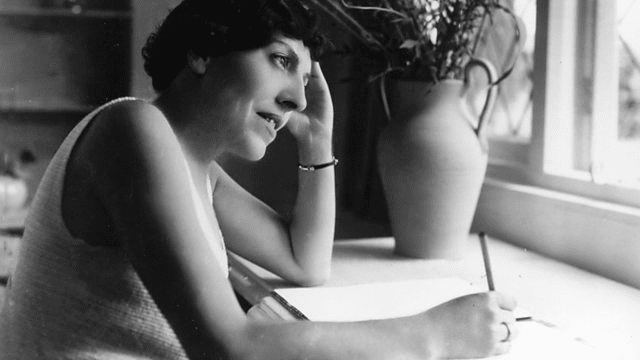
Dodie Smith was born in 1896 in Lancashire, near Manchester, as the only child of Ernest and Ella Smith (née Furber). In 1898, her father passed away, and Dodie and her mother moved in with her grandparents, William and Margaret Furber. Their home, Kingston House on Stretford Road, overlooked the Manchester Ship Canal. She grew up in a lively household with her mother, grandparents, two aunts, and three uncles.
Her love for writing and drama was nurtured by her family, particularly her uncle, who was passionate about theatre and frequently discussed works by Shakespeare and other dramatists. Another uncle, Harold Furber, introduced her to contemporary theatre, while her mother, who once performed on stage, also inspired her. Dodie wrote her first play at the age of 10 and performed in productions at the Manchester Athenaeum Theatre.
She attended school in Manchester, where she spent her most vibrant childhood and adolescent years. After her mother remarried, they moved to London, and Dodie continued her education at St Paul’s Girls’ School.
Career Development
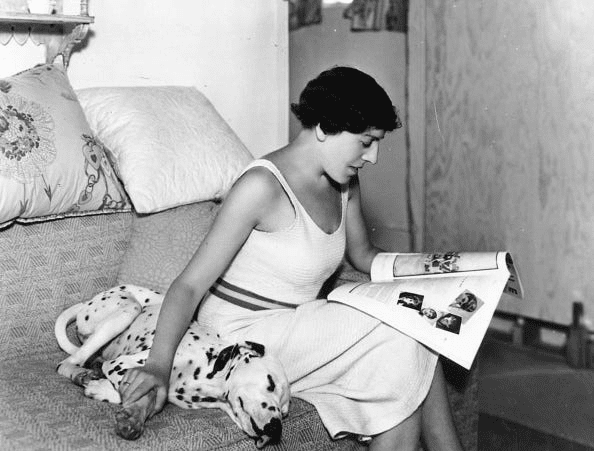
After school, Dodie studied at the Royal Academy of Dramatic Art in London, making her debut in Arthur Wing Pinero’s play Playgoers. She went on to perform various roles, including a Chinese girl in Mr. Wu, a maid in Ye Gods, and a young mother in Niobe. She also acted in repertory theatre in Portsmouth, performed for troops in France during World War I, and played Anna in The Pigeon.
Her theatrical career flourished in the 1930s, particularly with her play Autumn Crocus, which brought her acclaim as a playwright in London’s West End. However, the outbreak of World War II drastically altered the theatre scene, prompting Dodie to emigrate to the United States to continue her career.
While in the U.S., Dodie deeply missed her homeland. This longing inspired her novel I Capture the Castle, which was published in 1948. The book tells the story of Cassandra Mortmain, a young woman coming of age in a crumbling English castle. Filled with humor and nostalgia, it reflects Dodie’s yearning for England. After some time, she returned to Britain to further her writing career.
The Creation of 101 Dalmatians
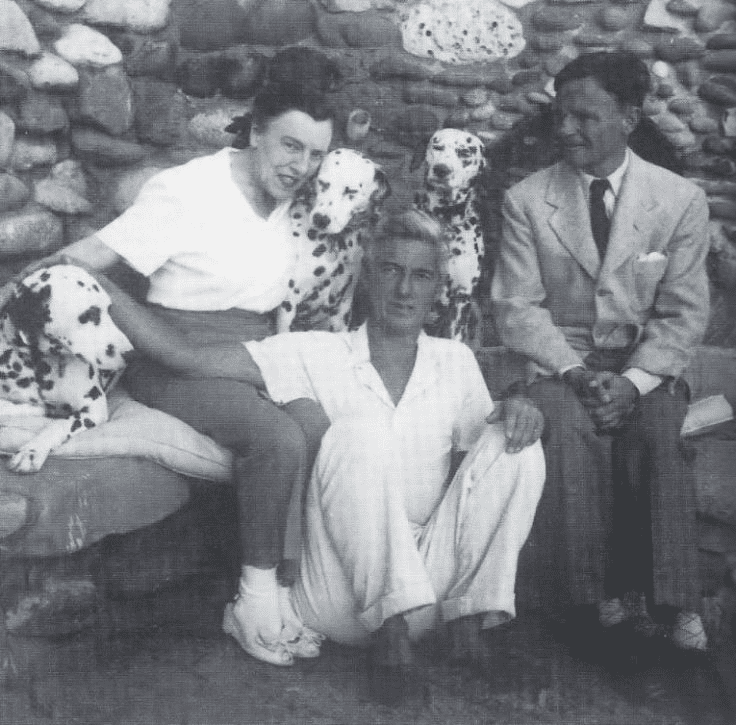
The idea for 101 Dalmatians stemmed from Dodie’s personal love for dogs. She and her husband owned several Dalmatians—up to nine at one time—and were captivated by their playful personalities. One of her favorite dogs, named Pongo, became the inspiration for the story’s main character.
Published in 1959, the children’s novel 101 Dalmatians follows the adventures of Pongo and Perdita as they embark on a mission to rescue their stolen puppies from the villainous Cruella de Vil. Cruella’s striking appearance and obsession with fashion made her one of the most unforgettable villains in children’s literature. The story was adapted into a Disney animated film in 1961 and later into a live-action movie in 1996, cementing Dodie Smith’s legacy worldwide.
A Lasting Legacy
Although 101 Dalmatians remains her most famous work, Dodie Smith’s literary contributions are much broader. Her other notable novels include The Young Moon with the Old, The Town in Bloom, It Ends with Revelations, The Bark of the Star-World, A Tale of Two Families, The Candlelight Girl, and Midnight Kittens. These works often explore themes of individuality, the passage of time, and the struggle to balance good and evil.
Dodie’s career spanned decades and continents, and her stories continue to captivate readers of all ages in the 21st century. Her most iconic creation, 101 Dalmatians, remains a cherished favorite among children worldwide.
Dodie Smith passed away in 1990 at the age of 94, leaving behind a vibrant legacy of timeless children’s literature that will continue to enchant generations to come.
Source:
- https://www.literaryladiesguide.com/author-biography/smith-dodie/
- https://www.goodreads.com/author/show/6208.Dodie_Smith
- https://www.imdb.com/name/nm0807977/bio/?ref_=nm_ov_bio_sm
- https://101dalmatians.fandom.com/wiki/Dodie_Smith
- https://michellecooper-writer.com/blog/2014/07/dear-dodie-the-life-of-dodie-smith-by-valerie-grove/