

Many residents of 21st-century Manchester may not know who the Scuttlers were or what they represented. The Scuttlers were a distinctive subculture that emerged in the working-class districts of Manchester in the late 19th and early 20th centuries. These groups were local youth gangs, and their rise was driven by the poverty that plagued working-class neighbourhoods, a lack of parental control, inadequate school discipline, and the monotony of life in Manchester’s slums. Beyond their notoriety for hooliganism, the Scuttlers left a lasting legacy in the city’s history with their distinctive style.
More details can be found on manchesterka.com.
Hairstyles of the Scuttlers
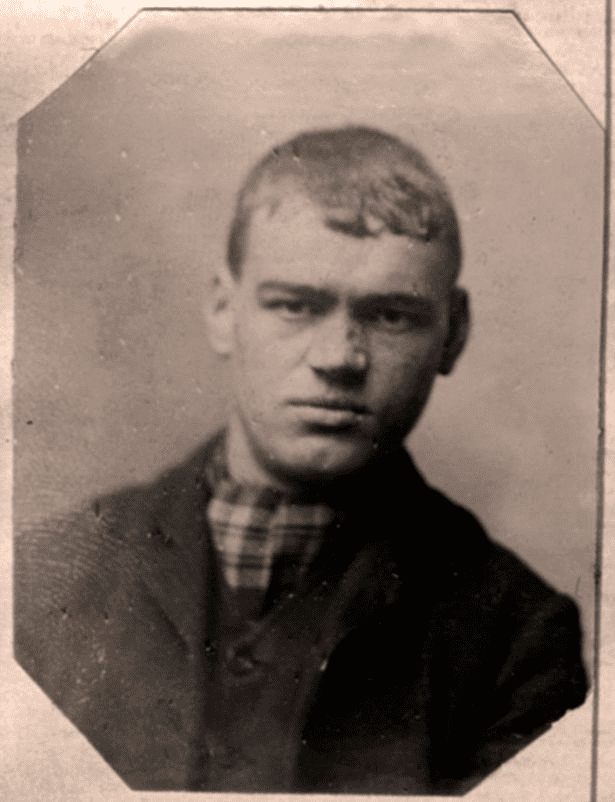
The Scuttlers were young men from working-class backgrounds known for their distinctive behaviour, which often included violent clashes with rival gangs. However, they are remembered not just for their acts of aggression but also for their unique sense of style.
One of the most recognisable features of the Scuttlers was their signature hairstyle, known as the “curtain” style. This featured long bangs parted in the middle or to one side, with shorter or shaved hair on the sides and back.
This hairstyle became particularly popular among young working-class men, especially gang members, in the late 19th century. To keep their hair in place, Scuttlers often used paraffin wax, a risky choice as it significantly increased the likelihood of fire. Some even glued their bangs to their foreheads over their left eyes for a more secure hold. The Scuttlers of Manchester were one of the groups at the time known for adopting this distinctive hairstyle.
The Unique Fashion of the Scuttlers
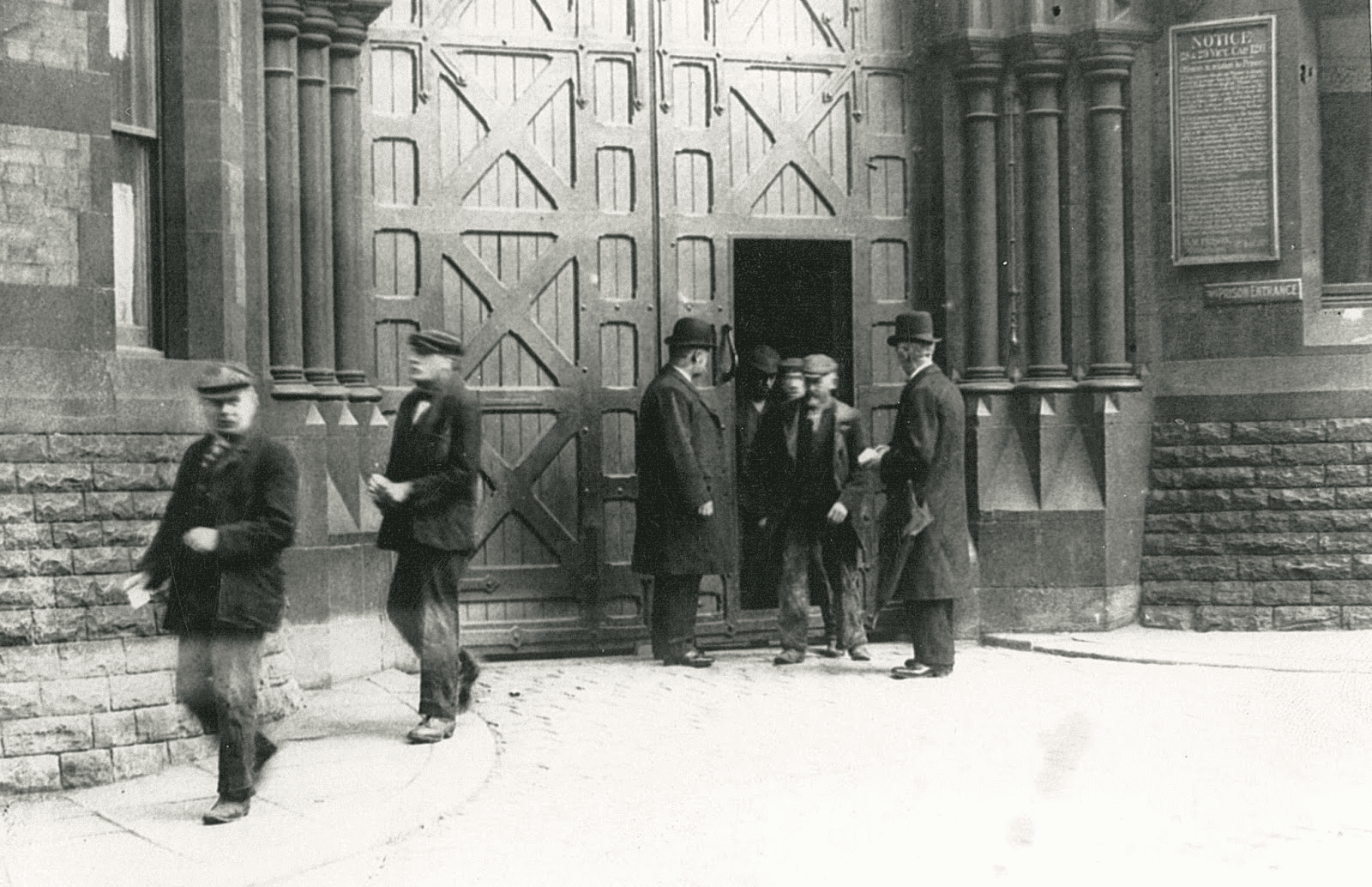
In addition to their hairstyle, the Scuttlers had a unique style of clothing that made them stand out unmistakably. Their outfits included flared trousers, buttoned jackets, brightly coloured scarves, and caps, all of which distinguished them from other young men in working-class neighbourhoods. Their attire often incorporated elements of work uniforms and pointed boots. Their caps were typically tilted to the left, serving as a symbol of their gang identity rather than merely a practical accessory.
Scuttler fashion wasn’t limited to the men; their female companions also adopted distinctive styles. Women often wore clogs, a popular choice among Manchester’s working-class population at the time, along with shawls and vertically striped skirts.
Silk scarves were another key element of Scuttler fashion. These scarves, often brightly coloured, were either worn around the neck or tied to belt loops, adding a vibrant touch to their outfits.
Accessories played a significant role in completing the Scuttlers’ look. Brass rings and large belts, often engraved or decorated with intricate patterns, were common. These items symbolised their status and affiliation with their gang and were sometimes used as weapons in street fights.
The Decline of the Scuttlers
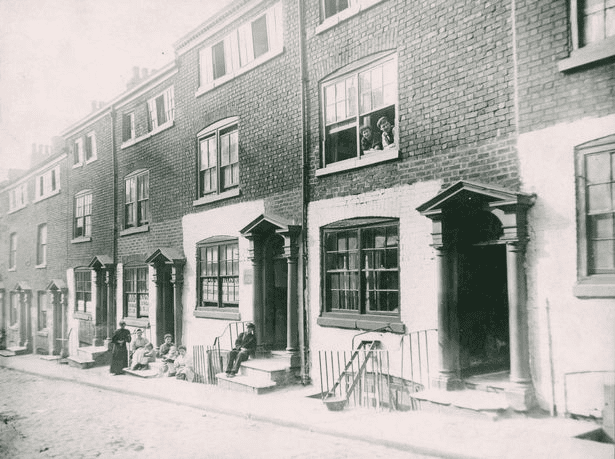
The Scuttlers hold a special place in the history of industrial Manchester. Known for their brawls and raids, they also left a mark with their characteristic fashion. However, their era came to an end in the early 20th century. What led to their decline?
The Manchester authorities implemented policies aimed at improving the quality of life in the city. At the start of the 20th century, the city council focused on clearing some slums and enhancing cultural and educational opportunities for the underprivileged. Special clubs were established to engage working-class youth in cultural activities, promoting peaceful pastimes like street football and cinema.
One of the key initiatives proposed by the authorities to curb gang violence was the founding of a football club named “St. Mark’s,” which later became known as “Manchester City.” This initiative sought to redirect young workers’ energy from hooliganism to constructive pursuits.
Other developments, including men’s clubs, libraries, public organisations, improved living and working conditions, and workers’ clubs, played a vital role in the Scuttlers’ decline. These reforms in the early 20th century led to the eventual extinction of the Scuttler subculture.