

When the suffragette movement is discussed, the names that most often come to mind are Emmeline Pankhurst and her daughters, who became symbols of the women’s fight for voting rights. But a no less important figure often goes unnoticed – Annie Kenney. Her story shows that the suffragette movement was not just a cause for educated women from the middle and upper classes, but also a genuine voice for the working-class population. Further details on manchesterka.com.
Alongside the Pankhursts, she participated in rallies, organised meetings, took part in demonstrations, and was even arrested on numerous occasions. But her involvement was particularly significant: Annie became living proof that the fight for equal rights concerned not only affluent women, but absolutely everyone.
The story of Annie Kenney is a reminder that the movement for women’s rights in Manchester and across Great Britain was built on the efforts of diverse women. Without her contribution, it is simply impossible to imagine the full scale of this struggle.
Annie Kenney’s Early Years
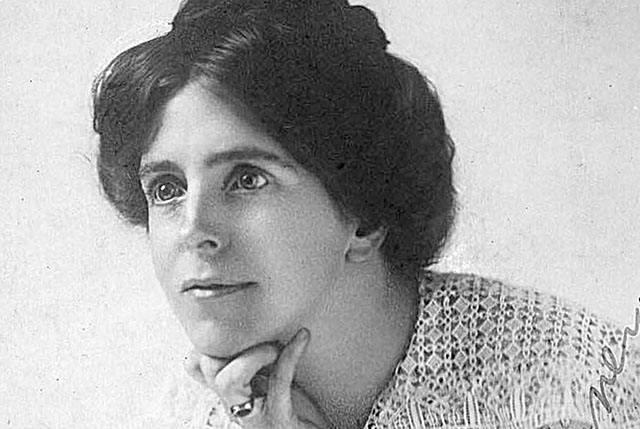
Annie Kenney was born in 1879 in Springhead, Yorkshire. She came from a simple working-class family and spent most of her youth in the harsh conditions of a cotton mill. Starting work at just 10 years old, she knew firsthand what it meant to endure long hours, gruelling physical labour, and the limited opportunities available to girls of her background. She combined her work at the mill with her studies. At 13, she had to switch to full-time work – shifts lasted 11.5 hours, starting at six in the morning. Working as a weaver’s assistant, Annie monitored the threads and set up the bobbins, and it was during this time that she suffered a serious injury – losing a finger that got caught in the spinning machinery.
She worked at the mill for 15 years but did not confine herself to the arduous routine. Annie took part in trade union activities, continued her education independently, and actively shared what she read with her colleagues. She was particularly inspired by the ideas of Robert Blatchford and his publication, “The Clarion,” which sparked her interest in literature and social issues.
Outside of work, Annie remained a part of her community: she attended church, sang in the choir, and strove for spiritual and cultural development, despite the severe conditions of her daily life.
This experience set her apart from many other suffragettes, who often came from middle-class or even wealthy families. Kenney gave the movement something it desperately needed: a working-class perspective. Her voice in this movement was dictated by personal experience. When she spoke of injustice, she spoke as someone who had felt it herself. This authenticity resonated deeply in Manchester, a city that was itself the heart of Great Britain’s industrial working class.
Activism in Manchester
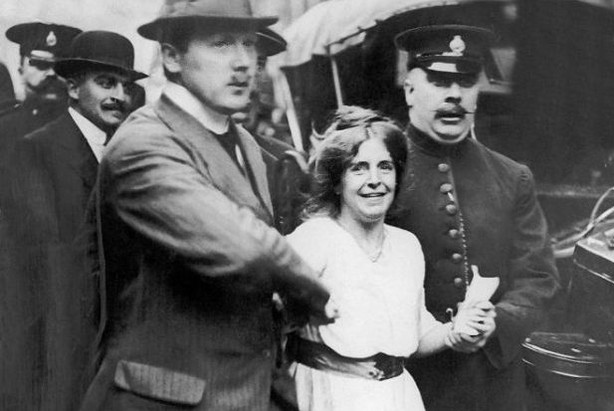
Annie Kenney went down in history as one of the most determined working-class suffragettes. Following her mother’s death in 1905, she and her sister Jessie attended a meeting where Christabel Pankhurst and Theresa Billington were speaking. These speeches became a turning point. Annie felt her life had been transformed. She began attending meetings of the Women’s Social and Political Union (WSPU), learned public speaking, and distributed leaflets among the factory workers of Oldham.
Kenney gained widespread recognition in October 1905 when, alongside Christabel Pankhurst, she interrupted a Liberal rally in Manchester, shouting the question of votes for women. They were arrested, and Annie found herself in prison for the first time. In total, she would serve 13 prison sentences.
Together with other activists, she established new branches of the WSPU, organised rallies and boycotts, and personally met with politicians to demand equal rights. Kenney was repeatedly subjected to forced feeding during hunger strikes and suffered greatly under the government’s policy, which allowed for the temporary release of weakened prisoners only to re-arrest them once they had recovered.
Despite the repression, Annie remained a symbol of courage and proved that working-class women were capable of changing history on an equal footing with the movement’s leaders.
The Impact of Annie Kenney
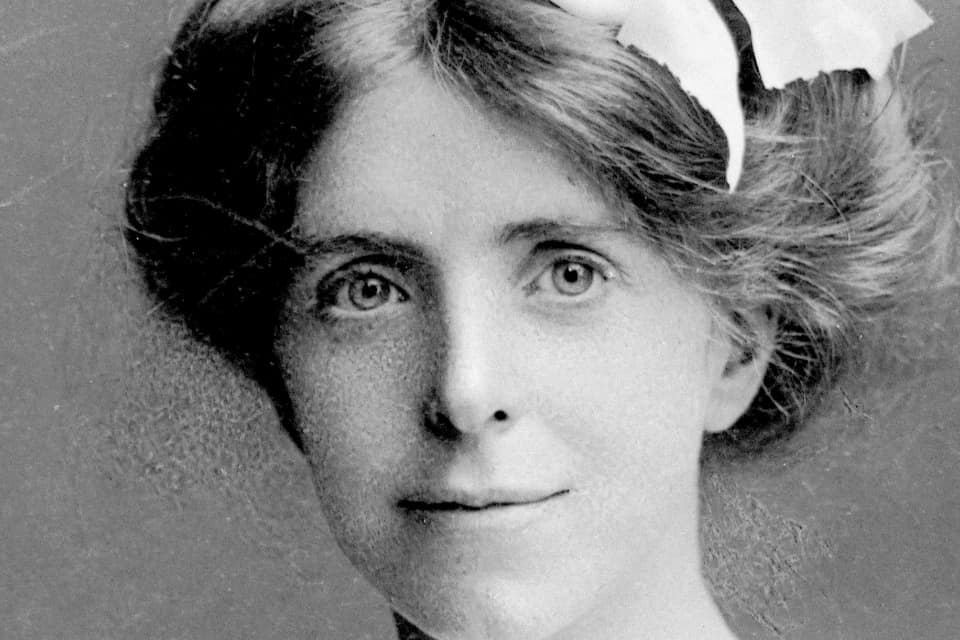
It should be noted that all these ordeals seriously undermined her health, but she never abandoned her cause. Her defiance became legendary: when forced to remain silent in court, she would write slogans on scraps of paper; when she was imprisoned, her very absence spoke louder than words.
Importantly, Kenney forged links between the suffragette movement and the labour movement. She argued that working women, especially in industrial centres like Manchester, needed political power not just as a matter of principle, but as a way to fight for better working conditions, fair wages, and social reforms. This intersection of class and gender issues made her one of the most radical voices of her time.
With the outbreak of the First World War in 1914, the suffragettes changed their strategy: at the call of Emmeline Pankhurst, they ceased their protest actions and threw themselves into the war effort. Women took on men’s jobs, and Kenney, along with her comrades, travelled across Great Britain and beyond, campaigning for support for the front and recruiting volunteers.
In 1921, Kenney published a series of memoirs, “Revelations of a Suffragette,” in the newspaper *The Sunday Post*. In them, she spoke candidly about her journey – from a factory worker to a leader of the women’s movement. Kenney shared memories of her first speeches, meetings with the Pankhursts, protests, arrests, hunger strikes, and even negotiations with the Archbishop of Canterbury.
These publications became her last major contribution to the story, a testament to the price women paid to win the right to vote.
Annie Kenney’s Contribution to the Fight for Women’s Suffrage
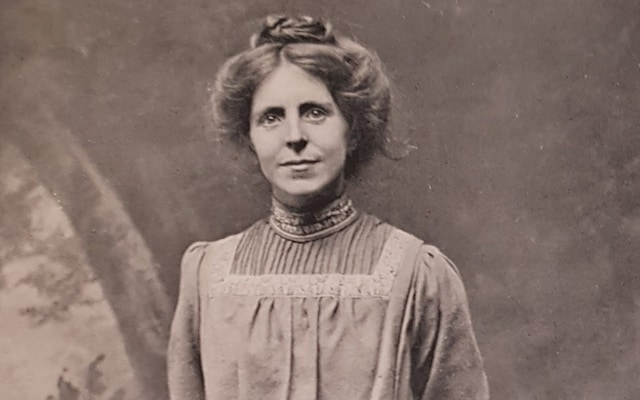
The Representation of the People Act 1918 finally granted the right to vote to some women over the age of 30, and subsequent reforms expanded this right even further. Annie Kenney, exhausted by years of activism, retired from public life after the war, marrying James Taylor and eventually moving to Hertfordshire.
Kenney’s story is a reminder that social movements are driven not only by famous leaders with influential connections but also by ordinary people with extraordinary courage. She carried the hopes of mill girls, factory workers, and countless women whose names were not widely known. By supporting the Pankhursts, she ensured that the suffrage movement did not lose sight of the working-class struggle.
In 21st-century Manchester, her contribution is honoured with statues, plaques, and exhibitions. But perhaps her greatest legacy is less tangible: the idea that real change happens when ordinary people refuse to be silent. Annie Kenney showed that a single voice can echo through history and transform a nation.
Annie Kenney was not just a suffragette and activist; she was a symbol of the Manchester spirit – resilient, outspoken, and unafraid to challenge injustice. She fought not only for the right to vote but for recognition, dignity, and equality. Thanks to her, the women’s movement in Manchester became more inclusive, more radical, and, ultimately, more powerful.
Interesting Facts from Annie Kenney’s Personal Life
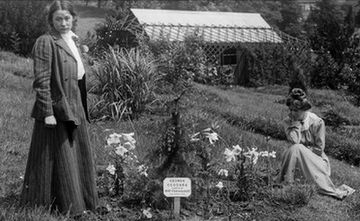
Annie Kenney had many close relationships with her comrades in the movement. A romance with Christabel Pankhurst was attributed to her, although many considered their relationship to be more platonic. Kenney was also friends with the Blathwayt family and was a frequent guest at their home, “Eagle House,” where she planted four trees to commemorate the fight for women’s rights.
The family supported Annie and her sisters financially, covering medical treatments, gifts, and expenses. However, Mary Blathwayt’s diaries contain entries about Kenney’s personal life, pointing to her short-lived romances with female activists, including Clara Codd and Adela Pankhurst. Researchers suggest that such entries may have been dictated by Mary’s own jealousy.